
Canadian Front-of-Package Labelling: What Food Businesses Need to Know
By Anu Bernier, is a food safety professional with decades of experience helping food and beverage businesses turn food safety principles into practical, effective systems. With deep expertise across GMP, HACCP, food safety management systems, regulatory requirements, and leading GFSI standards including BRCGS, SQF, and FSSC 22000, she brings both scientific knowledge and real-world industry insight to her work. Through her writing and training, Anu makes complex food safety topics easier to understand, offering practical guidance that professionals can confidently apply in their everyday operations.
Introduction
January 1, 2026 has come and gone, and Health Canada’s front-of-package (FOP) “high in” nutrition symbol is no longer a future requirement, it’s the current reality for most prepackaged food sold in Canada. CFIA has been clear there’s no enforcement discretion after the deadline, though products packaged before that date can still sell through. If your labels haven’t caught up, now is the time to close the gap.
What Is the FOP Symbol?
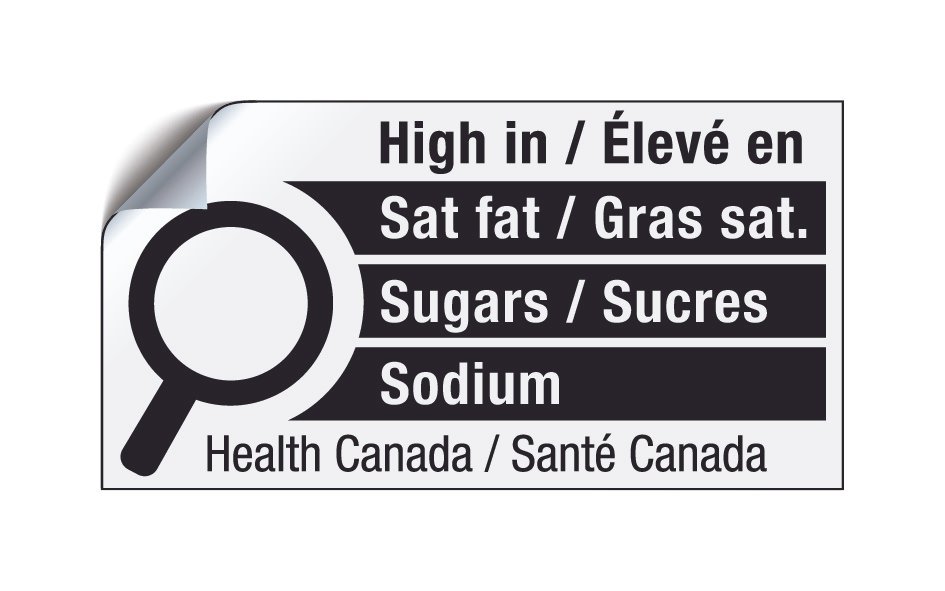
The regulation, which came into force in July 2022 with a transition period ending January 1, 2026, requires a standardized black-and-white magnifying-glass symbol on the front of most prepackaged foods that exceed set thresholds for saturated fat, sugars, or sodium. It’s meant to give consumers a fast, at-a- glance way to identify foods high in nutrients linked to diet-related chronic disease.
The Thresholds - More Nuanced Than “One Number”
The trigger isn’t a single flat percentage; it depends on the product’s reference amount:
- 15% Daily Value (of saturated fat, sugars, or sodium) for foods with a reference amount greater than 30 g or 30 mL that aren’t a main dish
- 10% Daily Value for foods with a reference amount of 30 g/mL or less
- 30% Daily Value for prepackaged main dishes (200 g or more for general products; 170 g or more for products intended solely for children 1–4 years old)
Saturated fat is calculated on its own, not combined with trans fat, so it’s worth double-checking
your Nutrition Facts table math specifically against the saturated fat line.
Know Your Exemptions
Not everything is in scope. Notable exemptions include plain milk, yogurt, and cheese; single-ingredient raw meat, poultry, and fish; fruits and vegetables without added problem nutrients; base ingredients like butter, sugar, salt, honey, and cooking oils; very small packages; and individually portioned food-service or restaurant items. If your product falls into one of these categories, confirm it against Health Canada’s guidance directly before assuming a symbol is or isn’t require, the exemption list has real nuance.
Bilingual and Format Requirements
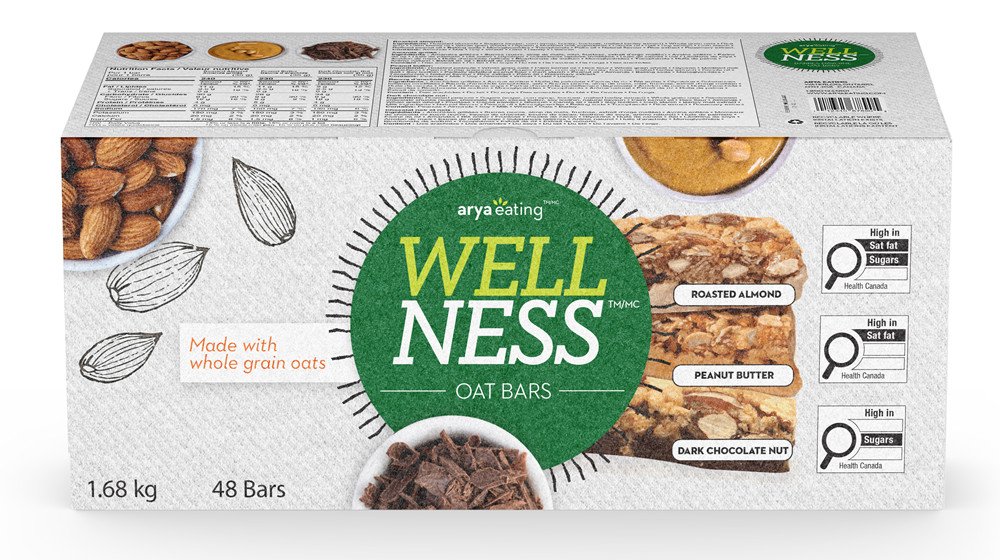
Like the rest of Canada’s mandatory label content, common name, net quantity, ingredient list, allergens, date markings, and the Nutrition Facts tabl, the FOP symbol must appear in both English and French. Beyond translation, the symbol has strict specifications for size, orientation, and placement; a symbol that’s technically present but too small, misplaced, or missing its French version is still a compliance gap, not a technicality an auditor will wave through.
“Product of Canada” Claims Are Under Closer Watch
Origin claims like “Product of Canada” or “Made in Canada,” and use of the maple leaf symbol, remain voluntary, but CFIA issued a Notice to Industry in March 2025 (updated July 2025) reinforcing that these claims must be accurate and non misleading, citing a rise in complaints, particularly around bulk produce. CFIA has stated it will take enforcement action against inaccurate origin claims, so this is a good moment to double-check any origin language on your packaging, not just your FOP symbol.
Where We’re Still Seeing Gaps
- The threshold trap: A formulation change, a new supplier, a reformulated recip, quietly pushes a product over an FOP threshold without triggering a label update. Reformulation and relabelingned to be linked processes, not separate ones.
- Format failures: Symbols present but non-compliant on size, orientation, or bilingual formatting.
- Brand tension: Marketing teams uneasy about a “high in” symbol appearing on packaging. It’s worth remembering this is a mandatory disclosure, not a marketing choic, and consumer trust tends to respond better to transparency than to a label that’s technically late.
What to Do Now
If your product formulations, package sizes, or supplier ingredients have changed at all since your last label review, it’s worth a fresh technical check against the current thresholds — not an assumption that your original compliance work still holds.
We provide technical label reviews to confirm your FOP symbols and Nutrition Facts tables are fully compliant with current SFCR requirements. Reach out at www.decodingfoodsafety.com for a compliance check.
Sources & Further Reading
Health Canada — Front-of-package nutrition symbol
https://www.canada.ca/en/health-canada/services/food-nutrition/nutrition-labelling/front-package.html
Let's Strengthen Your Food Safety - Together
Partner with experienced consultants, auditors, and trainers to strengthen your systems, protect your brand, and build a food safety culture that lasts.